Tahoe Fund

What runs deeper than Lake Tahoe? Our desire to preserve it.

  • About Us
    • Strategic Plan
    • Our Governance
      • Board of Directors
      • Staff
    • Teens for Tahoe
    • Financials
    • Our Founders
    • Stewardship Circle Donors
    • Careers
  • Projects
    • Our Projects
    • Support a Project
      • Million for the Marsh/Upper Truckee River Restoration
      • Aquatic Invasive Species (AIS)
      • Environmental Venture Trust
      • Tahoe City Bear Plaques
      • Smartest Forest Fund
      • Tahoe East Shore Trail
      • Tahoe Trails Endowment
    • Submit a Project
  • Ways to Give
    • Donate Online
    • Current Projects
    • Join The Stewardship Circle
    • IRA Gifts
    • Smartest Forest Fund
    • Planned Giving
    • $1 for Tahoe
    • Corporate Partnerships
    • In Memoriam Donations
    • Tahoe Weddings
  • Events
    • Boat Parade
    • 2025 Founders Circle Summer Celebration
    • Tahoe Fund Talks
      • 2025 Tax Changes
      • Life Beneath Tahoe Waters
      • The CARES Act Impact on 2020 Giving
      • TEDxReno Salon: “Crystal Clear: Understanding Tahoe’s Water Clarity”
  • PLATES FOR POWDER
    • California & Nevada’s Commitment to Lake Tahoe
  • News
You are here: Home / Blog

TAHOE FUND WELCOMES NEW MEMBERS TO ITS ADVISORY COUNCIL

April 10, 2023 by Caroline Waldman

Public agency leaders will advance their support of Lake Tahoe in a new capacity
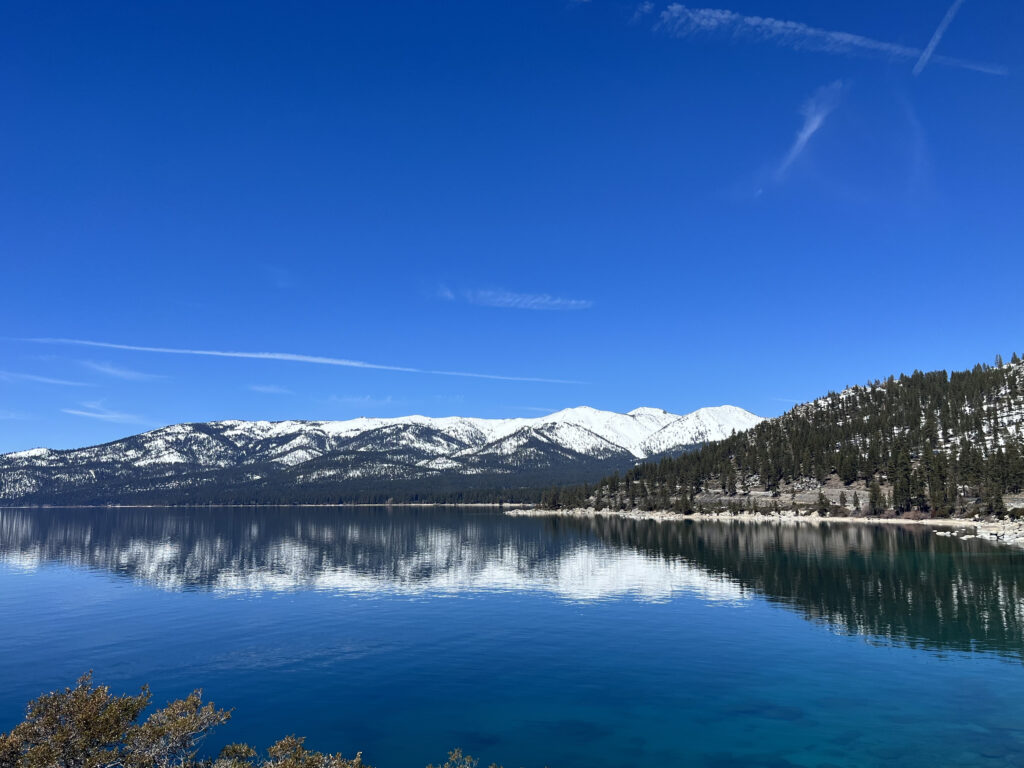
The nonprofit Tahoe Fund announced today that four leaders have joined its advisory council. Invited because of their extensive experience as the heads of the Tahoe Fund’s public agency partners, these new advisors will support the organization’s board of directors as they work to improve the Tahoe environment.

“On behalf of the Tahoe Fund Board of Directors, I am pleased to welcome Dominique Etchegoyhen, Julie Regan, Jason Vasques, and Erick Walker to our advisory council,” said Cory Ritchie, Tahoe Fund Board Chair. “Given our goal to leverage philanthropic support to secure public funding for environmental projects, their insight ensures our work has the greatest impact possible.”

The advisory council provides invaluable knowledge of public agency challenges and opportunities as it relates to the Tahoe Fund’s goal of improving the Tahoe environment for all to enjoy. The new members appointed to the advisory council include:

Dominique Etchegoyhen, Nevada Department of Conservation and Natural Resources

Etchegoyhen has served as the deputy director of the Nevada Department of Conservation and Natural Resources since 2017. Prior to working for the State of Nevada, he co-founded Legacy Land and Water, LLC, and was a partner with Terra Firma Associates, LLC, both of which were small, versatile land use consulting firms dedicated to protecting and enhancing the environment. Etchegoyhen is licensed to practice law in Nevada and California, and served as a law clerk to Judge Howard D. McKibben in the U.S. District Court, District of Nevada.

Julie Regan, Tahoe Regional Planning Agency (TRPA)
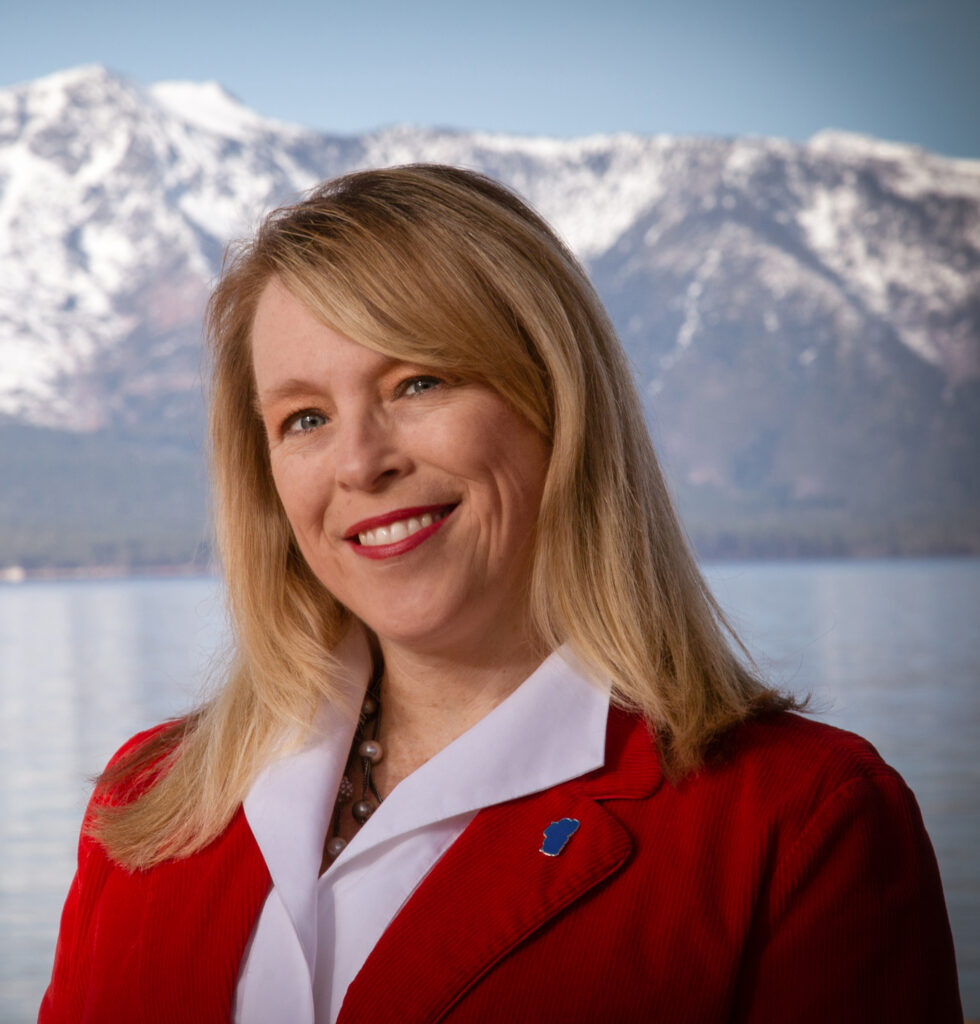
Regan is the executive director of TRPA and has held an executive position at the agency since 2003. TRPA, the first environmental interstate compact agency of its kind in the United States, is charged with the environmental protection of Lake Tahoe, the ancestral home of the native Washoe. Regan is a Ph.D. student in environmental science at the University of Nevada, Reno focusing her research on the intersection of science and public policy, building on her experience at Lake Tahoe balancing environmental preservation in a $5-billion tourist-based economy.

Jason Vasques, California Tahoe Conservancy
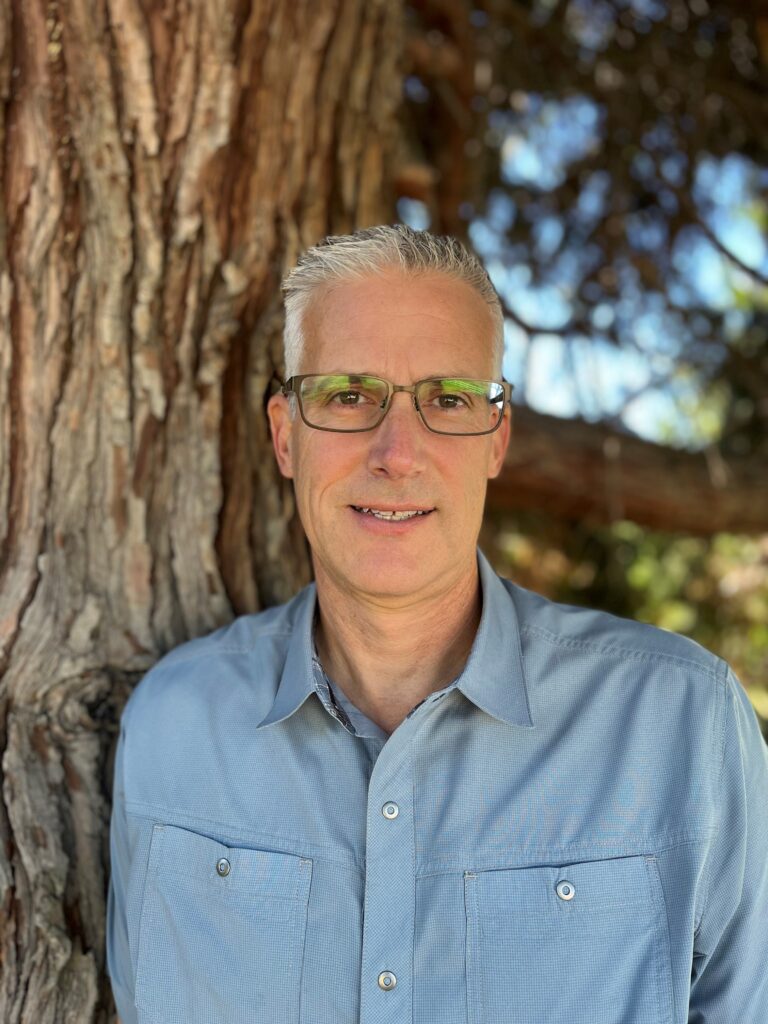
Vasques, the California Tahoe Conservancy’s executive director, has also previously supervised the agency’s landscape forestry program. Educated in the U.S. and New Zealand, Vasques brings over two decades of experience in state government and nonprofit management, from the coral reefs of the Caribbean to rivers and streams in the Sierra Nevada and California’s central valley. Growing up in a mixed heritage home in a rural farming community in the central San Joaquin Valley, Vasques is committed to a vision for Tahoe that benefits all.

Erick Walker, U.S. Forest Service Lake Tahoe Basin Management Unit (LTBMU)
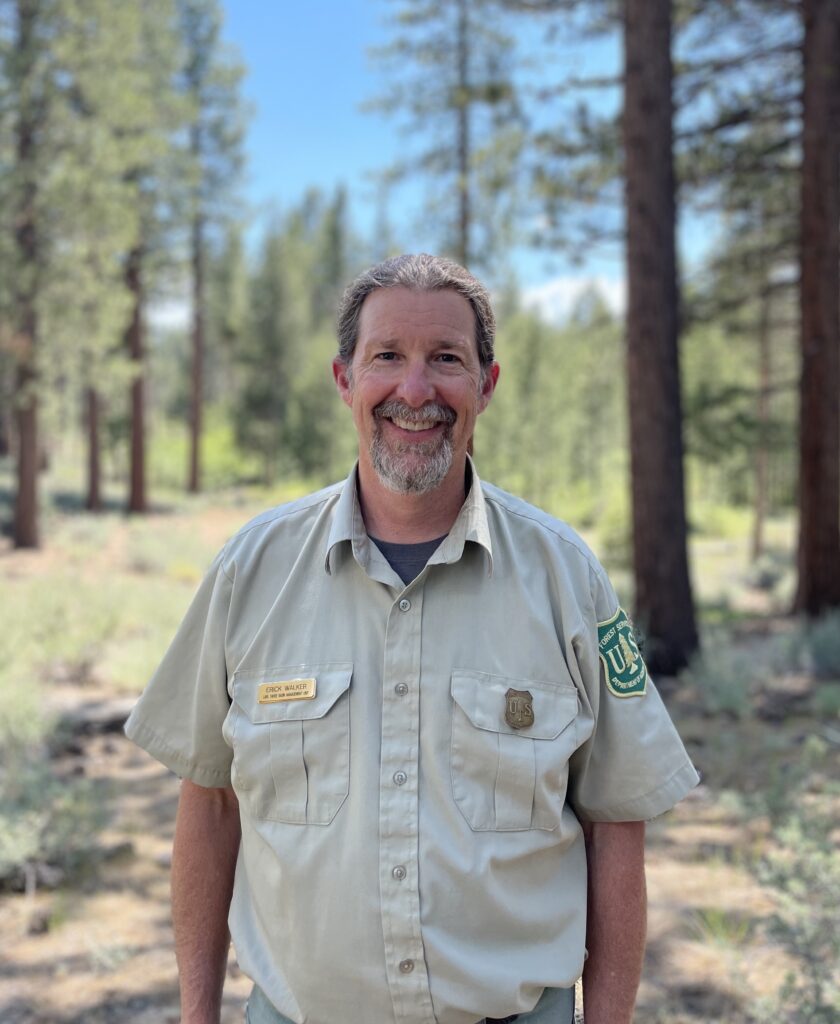
Walker is the forest supervisor for the LTBMU. He began his Forest Service career as a range technician while earning his B.S in Natural Resource Management from University of Nevada, Reno. After earning his degree, Walker left the Tahoe region to further his knowledge and stewardship of public lands and served in numerous leadership positions in Vermont, Idaho and Washington. Walker brings a passion for finding solutions to the complex issues of managing public lands and the relationships people have with them. Born and raised in California, Walker moved to Tahoma in 1988 and now lives in South Lake Tahoe. 

The Tahoe Fund is a nonprofit organization that supports environmental improvement projects that restore lake clarity, expand sustainable recreation, promote healthier forests, improve transportation, and inspire greater stewardship of the region. Learn more about the Tahoe Fund and its current and completed projects at www.tahoefund.org.
Filed Under: News

How Does Wildfire Smoke and Ash Impact Lake Tahoe?

April 3, 2023 by Caroline Waldman

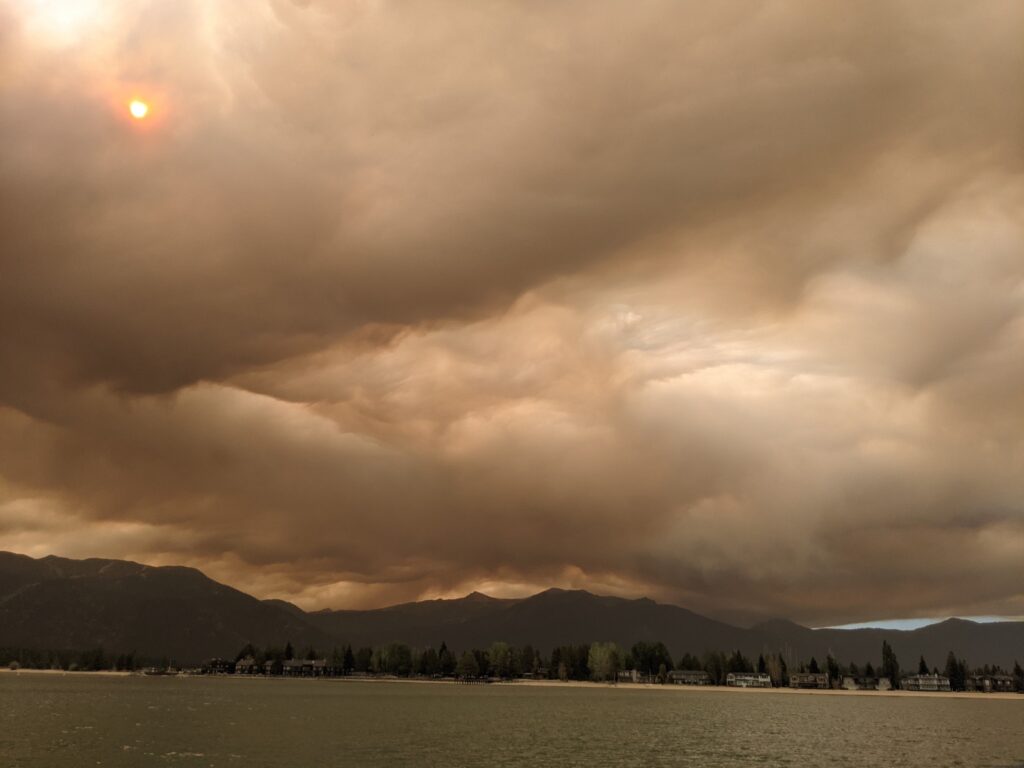
Photo by the League to Save Lake Tahoe

In the summer of 2021, flames from the history-making Caldor Fire spread eastward, threatening the Lake Tahoe Basin. Amidst the crisis, scientists saw an opportunity to answer a critical question: how does wildfire smoke and ash impact Lake Tahoe?

Kickstart funding from the League to Save Lake Tahoe and the Tahoe Fund allowed scientists from the University of Nevada Reno, Utah State University, University of California Davis, Desert Research Institute and Miami University to mobilize quickly and launch a rapid response study. 

“When we have extreme events like the Caldor Fire, we need to look at the short- and long-term impacts on the entire ecosystem,” said Laura Patten, senior science policy analyst for the League to Save Lake Tahoe. 

“While the flames burned thousands of acres of forest and directly threatened our community, our science experts were able to rapidly respond and look at the myriad of other impacts from the Caldor Fire. By collecting the data and doing the science, they’re building a view of how the entire Tahoe Basin responds. These rapid response efforts are integral to understanding repercussions from wildfires, which are becoming more frequent and severe.” 

One key element of the study, led by the University of Nevada Reno, measured ash falling from the sky to see if it delivered nutrients that could feed algae living in the Lake, or if the ash simply dropped tiny, inorganic particles – both of which can harm Tahoe’s water clarity and quality. 

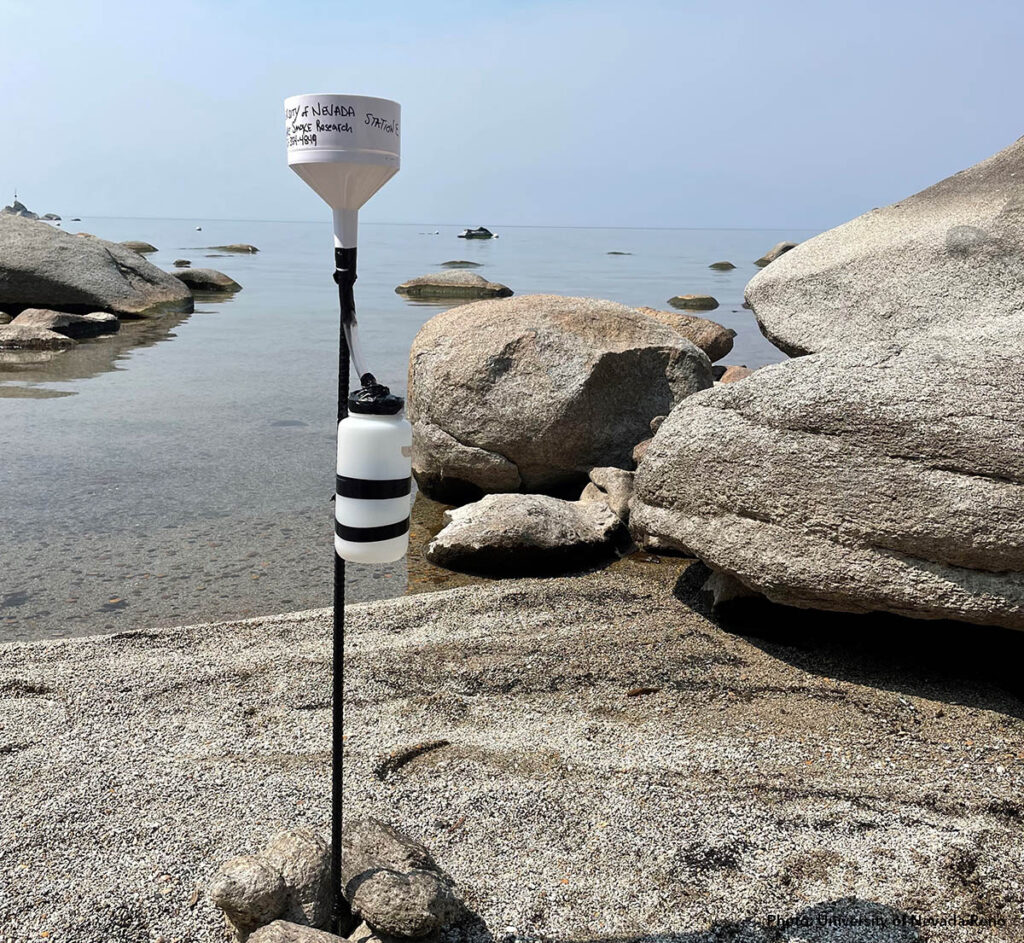
To answer the question, the research team installed collection devices filled with special glass marbles in locations around the Tahoe Basin, close to and farther from the active Caldor Fire. Ash particles that fell in the open-topped containers were analyzed to determine the amount, size, nutrient composition and deposition over time. 

Photo by University of Nevada Reno Global Water Center

Because of wind and proximity to the fire, five times more ash fell in the south and east areas of the Lake, as compared to the north and west. There were also differences in the nutrient composition of the ash that fell, including phosphorus and nitrogen that are needed for algae to grow. In appearance, the falling bits ranged from brown, semi-scorched vegetation – which were the most nutrient-packed – to unrecognizable, gray flakes.

The ash didn’t just fall on the water; it also obscured sunlight, as one may remember for those several gloomy months in the summer of 2021. Normally, light conditions on the surface of the Lake are too intense for algae to grow. Light muted by ash could actually encourage algae to grow where it normally would not. 

In combination, those two findings – less intense light at the water’s surface, and an air-drop of nutrients – led the researchers to believe that smoke and ash from wildfires is likely to lead to more algae growth, and therefore, reduced clarity of Lake Tahoe’s water.

“This study helped establish important baseline data for scientists working to understand the holistic impact of wildfire on our ecosystems” explained Caitlin Meyer, chief program officer for the Tahoe Fund. “We know that wildfire affects forest health and habitat, air quality and communities, but very little is known about what it means for lake clarity and health. These findings lay the groundwork for future research into the topic, and will help Team Tahoe craft more effective ways to protect the lake’s unique, fragile ecology.”

The University of Nevada Reno’s work described above was a component of a larger research project. Read the full study report on the Tahoe Science Advisory Council website – tahoesciencecouncil.org.

This blog post was written by the League to Save Lake Tahoe & the Tahoe Fund

Filed Under: News Tagged With: Caldor Fire, Lake Clarity

TAKE CARE TAHOE PROMOTES USE OF SLED CORRALS TO REDUCE PLASTIC WASTE AT POPULAR SLED HILLS

March 24, 2023 by Caroline Waldman

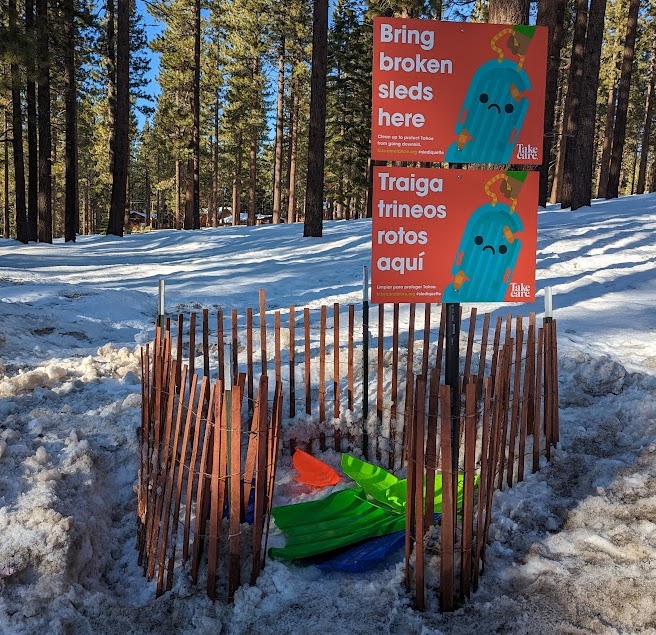
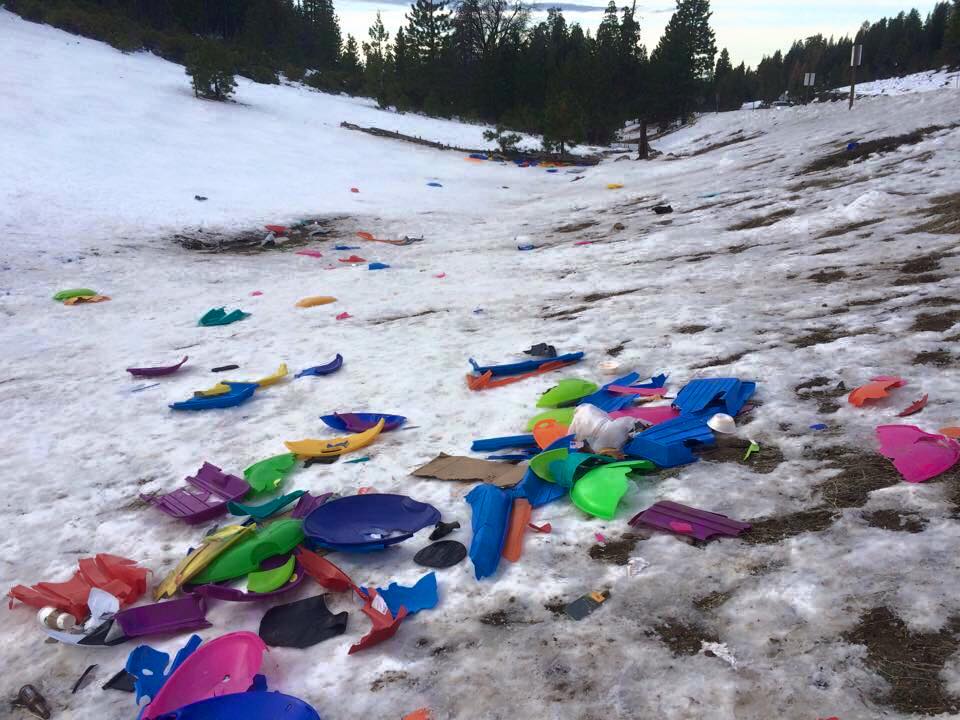
With this winter’s seemingly endless snowfall, Tahoe’s sled hills have been packed with families every weekend. After a day of fun, these locations can become blanketed in broken plastic sleds and other discarded trash, creating an excess of waste on the hills and a hazard to other sledders. Take Care Tahoe and its partner organizations have set up sled corrals to help manage this issue at five of the most popular sites for sledding in the Tahoe region. 

“Cheap plastic sleds lead to an enormous amount of trash because they break easily and are difficult to clean up,” explained Marilee Movius, Senior Community Engagement Manager, League to Save Lake Tahoe. “Not only are the sharp shards of plastic sleds dangerous for other sledders, they begin to break down into microplastics that will eventually end up in the lake.”

Take Care Tahoe encourages all users to practice Slediquette – this means properly disposing of broken sleds in designated sled corrals, or using dumpsters, sealed trash cans or simply taking trash home with them if other disposal options aren’t available. Each sled corral is a small, fenced off area made for collecting broken pieces of sleds. These corrals are located at Spooner Summit, Van Sickle Bi-State Park at Stateline, Fallen Leaf Lake Road and Ski Run Boulevard in South Lake, and Truckee. Take Care Tahoe Volunteers, including members of the League’s Tahoe Blue Crews, work throughout the winter to remove sleds and other trash from these areas.

On Saturday, March 25 from 9am – 2pm, community members and visitors are invited to showcase their Slediquette by taking part in a cleanup event at the Spooner Summit sled hill. More information and a link to register can be found at keeptahoeblue.org/events.

Collecting the trash from broken sleds in one, centralized place makes it easier to clean up, but it doesn’t solve the problem of producing more trash in the first place. The most environmentally friendly option is to buy a more durable sled, ideally made out of wood or metal that will last for multiple seasons. Local Raley’s stores in Tahoe provide more durable options. 

“Raley’s is proud to partner with Tahoe Fund and Take Care to reduce the trash that comes from plastic sleds. Keeping Tahoe clean and safe is our priority. In stores, we expanded our offerings to include more durable, eco-friendly and long-lasting sleds. This is both better for the environment and a better investment for our customers,” said Chelsea Minor, Raley’s Executive Director, Community Impact & Public Affairs. 

In addition to bringing home everything you bring on your outdoor adventure, as another element of practicing good Slediquette, recreators are strongly encouraged to choose official sledding hills instead of pulling off the side of the road to find their small hill fun. At official sledding hills, vendors offer sled rentals, parking and restrooms, and are required to keep their hills litter-free. At unofficial hills, the combination of unmanaged, off-highway parking and nearby traffic can put sledders in danger.

Sledding is one of the highlights of the winter season in Tahoe. It is an activity that everyone can enjoy, regardless of age, skill level, or previous experience in the snow. However, it is important that everyone does their part to clean up after themselves to help protect the natural environment and keep our sled hills safe and trash-free.

For more information about practicing Slediquette, where to rent or buy metal and wooden sleds, and the locations of managed sledding hills around Lake Tahoe, visit takecaretahoe.org/sleds.

###

Filed Under: News

Tahoe Trails Madness

March 14, 2023 by Caroline Waldman

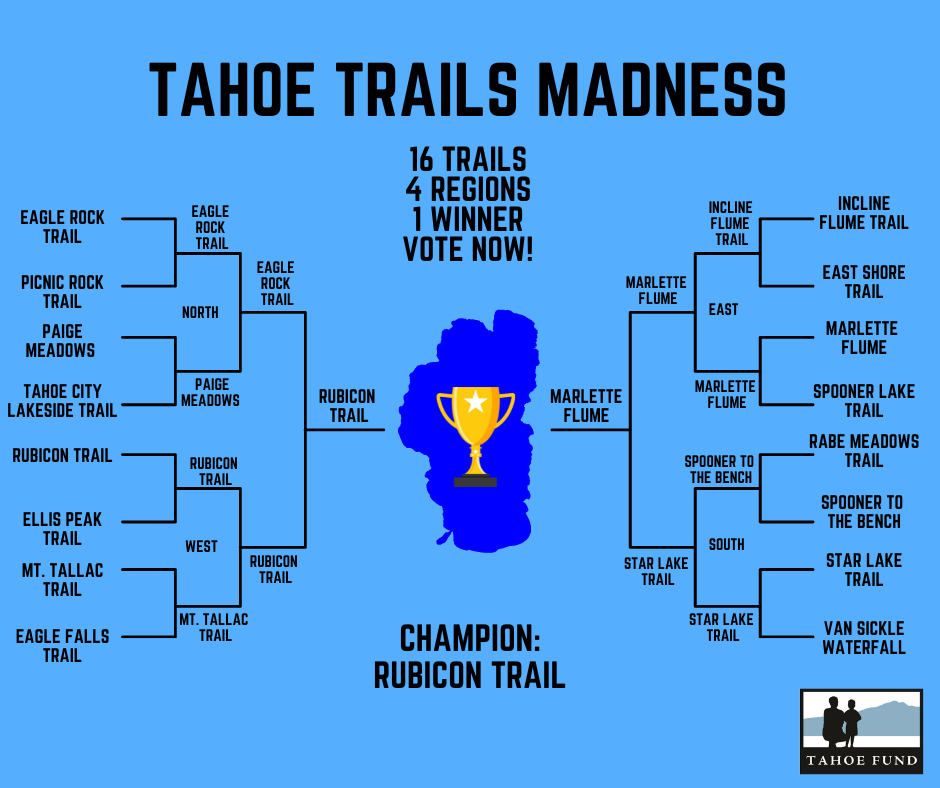
Over the last few weeks the Tahoe Fund has been running a March Madness style tournament to determine the most popular trail in Tahoe. This March was the snowiest on record, meaning it’s still not hiking season, but March is always bracket season!

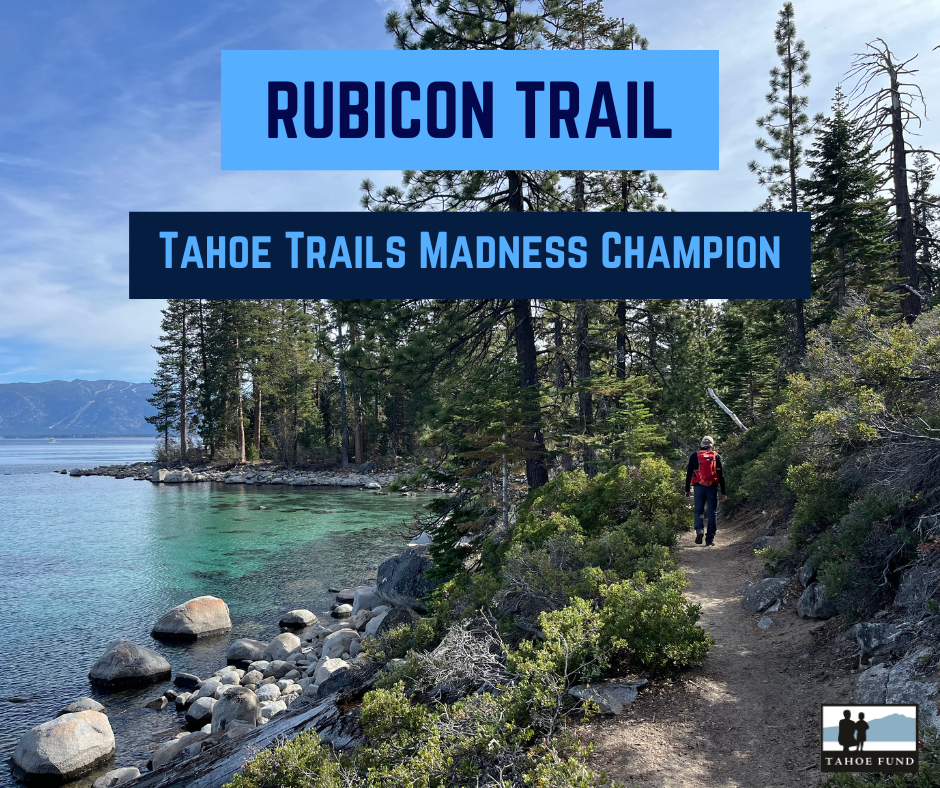
Congratulations to the 2023 Tahoe Trails Madness Champion: the Rubicon Trail! The Rubicon entered this tournament as one of the favorites, known for its great lake views, accessibility, and recognizable name.

The champ went up against tough competition in the tournament, facing Ellis Peak in the first round and Mt. Tallac in the second. In the Final Four, Rubicon easily topped Eagle Rock and the Marlette Flume Trail to bring home the title. 

Thanks to everyone who voted over the last three weeks; we received thousands of votes both online and on Instagram. Now that the tournament is over, we just need to wait for our trails to melt out. See you all on the Rubicon Trail this summer!

Check out this map to see the locations of the top 16 trails and the breakdown by region.

Filed Under: News

New Legislation Protects Critical Funding Source for Lake Tahoe

March 7, 2023 by Caroline Waldman

Last week, Sen. Catherine Cortez Masto introduced new bipartisan legislation to extend the Lake Tahoe Restoration Act, an essential source of federal funding to improve Lake Tahoe’s environment. She is joined by California and Nevada congressional leaders Sens. Feinstein, Padilla and Rosen, along with Reps. Amodei, Garamendi, Titus, Lee and Horsford. 

The current Lake Tahoe Restoration Act is set to expire in 2024, spelling the end of hundreds of millions of federal dollars for Tahoe’s Environmental Improvement Program. Originally passed in 2000 and then again in 2016, this legislation has helped to fund projects that improve forest health, lake clarity, fight invasive species and protect habitat. 

“The Lake Tahoe Restoration Act is an absolutely critical source of funding for Tahoe’s environmental improvement projects,” said Caitlin Meyer, Tahoe Fund Chief Program Officer. “We are so grateful to our congressional leaders for championing this important legislation to continue a decades-long legacy of caring for our national treasure together.”

Learn More

Photo by Hannah Pence

Filed Under: News

  • « Previous Page
  • 1
  • …
  • 15
  • 16
  • 17
  • 18
  • 19
  • …
  • 85
  • Next Page »

INTERACTIVE MAP

Explore our projects and learn more about how they will help shape the future of Lake Tahoe.

Keep up with our latest news & events by joining our e-newsletter.

Categories

  • $1 for Tahoe
  • Archive
  • Events
  • News
  • Contact Us
  • Tahoe Fun Facts
  • News
  • Site Map
  • Terms of Use
  • Privacy Policy

948 Incline Way  |   Incline Village, NV 89451  |   775.298.0035

Tax ID: 01-0974628
Lake Tahoe Destination Stewardship Council